Ontario: Jane’s Walk
Questers Bring History to Life at St. John’s Cemetery
For Questers, preserving history is about more than caring for old buildings and artifacts. It is also about making history come alive—sharing the stories of the people and places that shaped a community and inviting others to discover them.
That spirit was on full display May 4 when Quester volunteers participated in Jane’s Walk, an annual festival of free, community-led walking tours held the first weekend of May in hundreds of communities around the world.
Inspired by urbanist and activist Jane Jacobs (1916–2006), Jane’s Walk encourages people to explore their neighborhoods, discover stories that might otherwise be overlooked, and connect with their communities. For Questers, it offered a perfect opportunity to combine historical education, community service and, of course, a little fun.
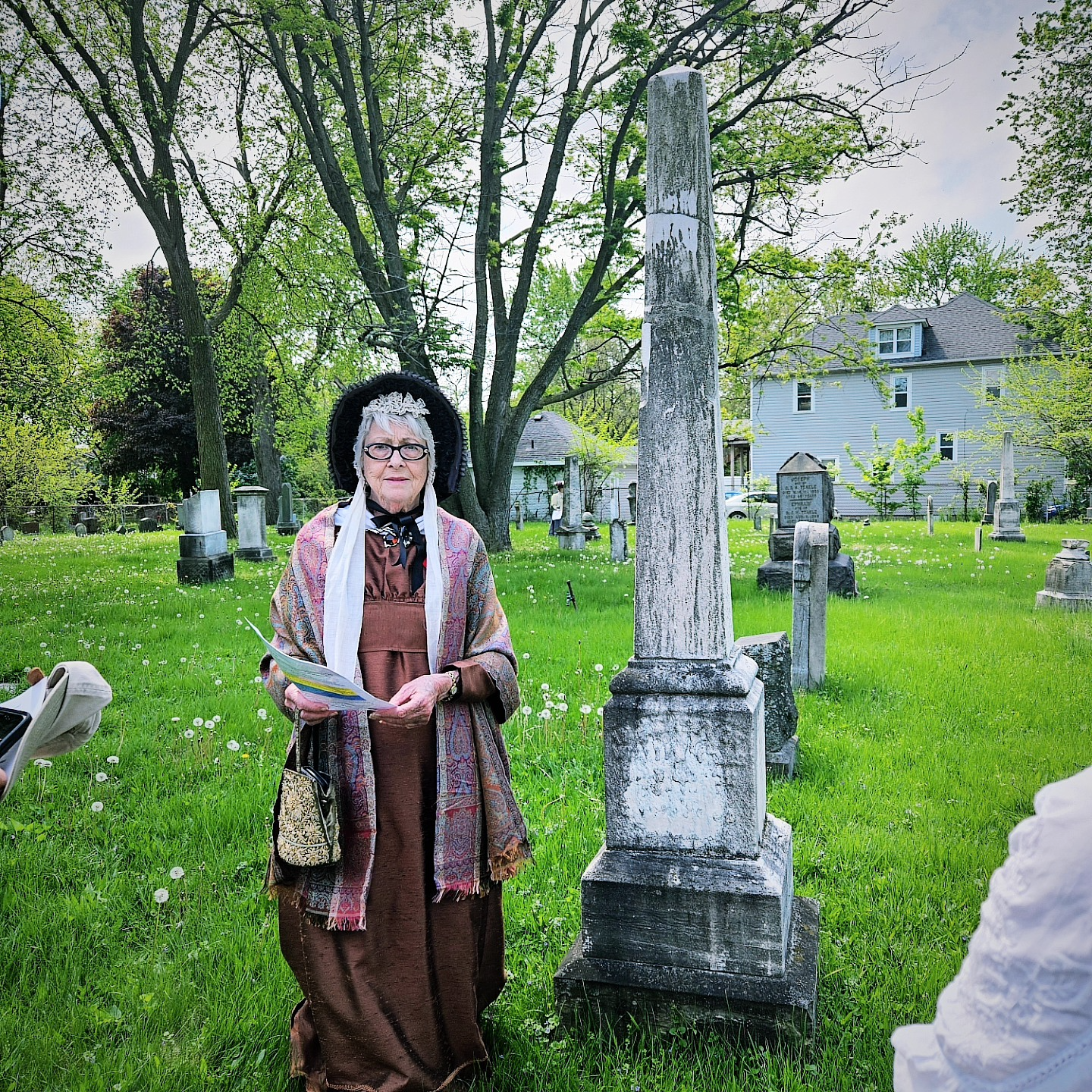
Dressed in historically appropriate costumes, Quester volunteers led visitors through St. John’s Anglican Church and Cemetery in Sandwich Town, sharing the fascinating stories of the veterans and other notable individuals buried there.
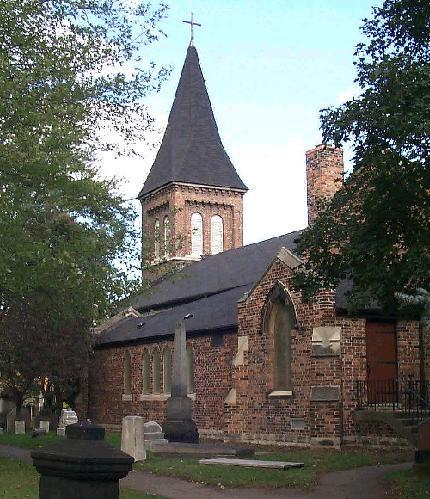
Established more than 200 years ago, St. John’s is one of the most significant historic sites in the Sandwich community. The red-brick church features a Gothic Revival sanctuary and Norman-style tower, while the adjoining cemetery contains tombstones dating to 1793. The cemetery is recognized as the oldest Anglican graveyard west of Niagara Falls and is designated for its heritage value by the City of Windsor.
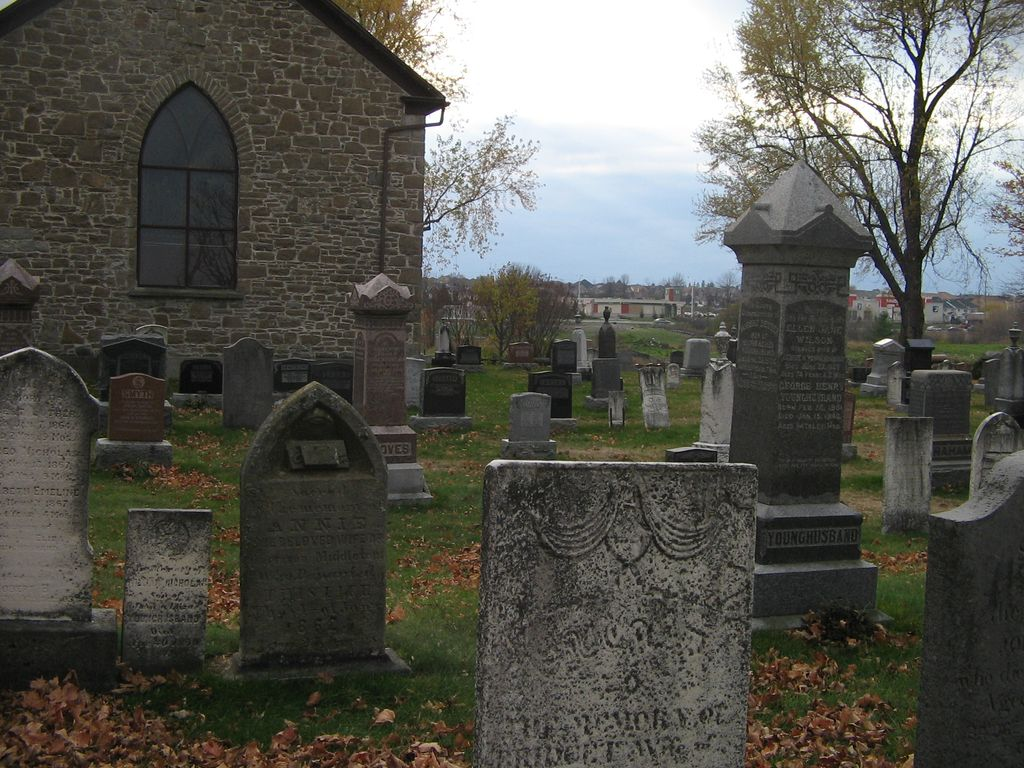
Its gravestones tell the story of a community and the people who built it. Among those buried there are early pioneers, veterans of the War of 1812, escaped slaves from the United States, prominent civic and religious figures, and even individuals who were interred in the Potter’s Field.
Visitors on the Quester-led walk discovered that some of the cemetery’s stories stretch far beyond Windsor.
One veteran had fought against Napoleon at the Battle of Waterloo. Another represented Canada at the 1936 Olympic Games in Berlin. A leading seaman served aboard a destroyer that helped protect the evacuation of Allied troops from Dunkirk. Another veteran served in both World Wars before going on to become a prominent architect whose work contributed to the development of both Detroit and Windsor.
The cemetery also includes the graves of important figures in the region’s early history, including Dr. James Hume, who was killed during the Battle of Windsor in 1838, and Hon. Alexander Grant (1734–1813), a senior member of the executive and legislative councils of Upper Canada.
Former history teacher, retired principal and local historian David Garlick has also emphasized the value of exploring Windsor’s history through its cemeteries.
The setting itself provides an extraordinary lesson in local history. When Sandwich was laid out, the four corners of Sandwich and Brock Streets were deliberately reserved for civic and religious purposes. More than two centuries later, St. John’s remains an important part of that historic landscape.
Even the gravestones offer lessons. Visitors can see an impressive variety of materials, sizes, designs and ornamentation, from detailed inscriptions and stone carvings to bronze plaques and other distinctive memorials.
For the Questers, however, the most important part of preservation is what happens when those stories are shared.
By stepping into period costume, leading a walk and bringing the people behind the gravestones back into the conversation, Quester volunteers turned a historic cemetery into an outdoor classroom—and made learning history an experience rather than simply a lesson.
It was history with a human face, a good walk and plenty of fun.
Programs such as Jane’s Walk demonstrate how Questers give back to their communities: by preserving the past, educating the public and finding creative ways to make local history accessible, engaging and memorable.
Sometimes, all it takes is a cemetery, a few remarkable stories and enthusiastic volunteers willing to take a step back in time.